
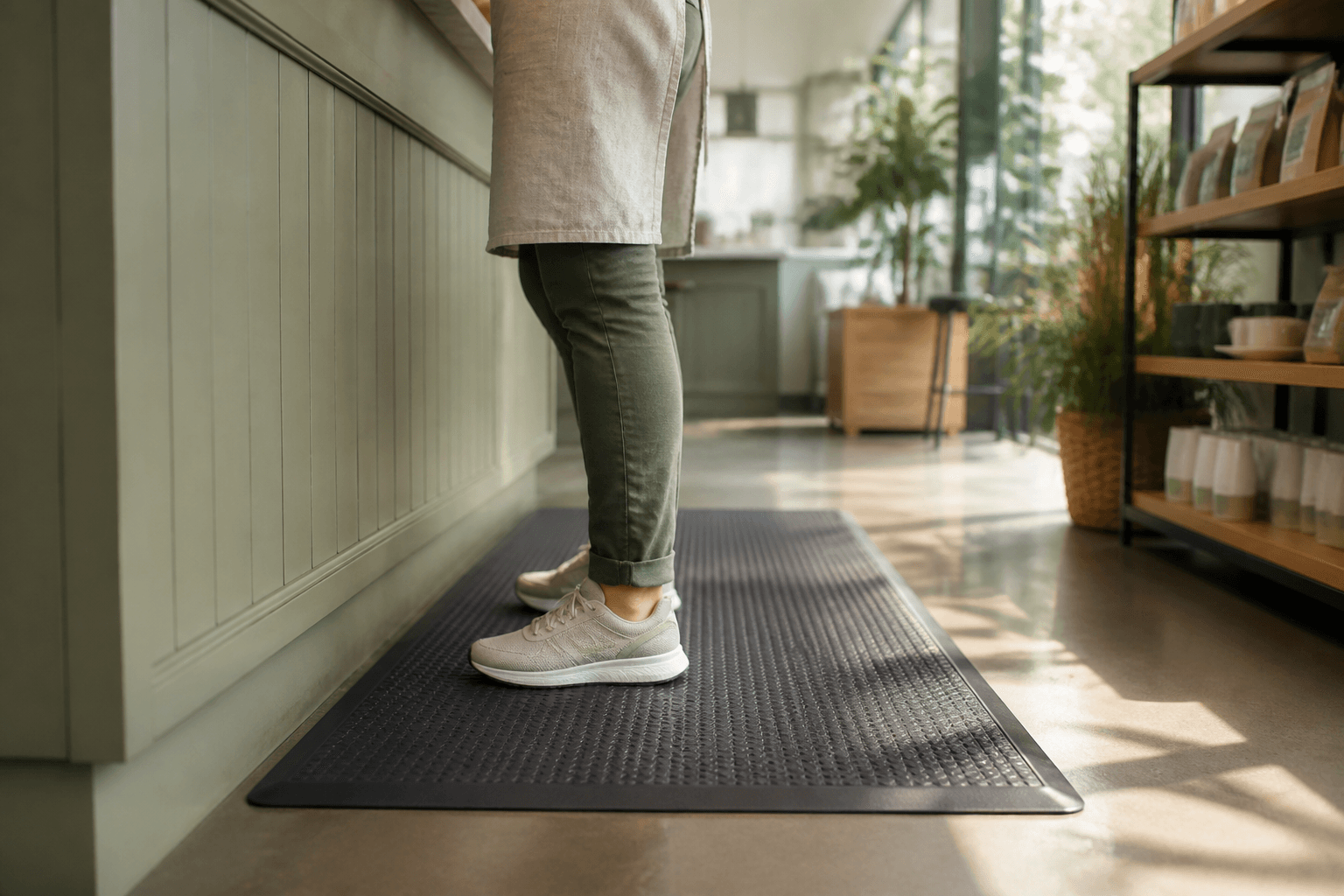
By the last hour of your shift your feet feel hot, heavy and done. You sit in the car and swear you will stretch tonight. Then tomorrow's roster arrives and the cycle repeats.
Long standing keeps the same tissues under low-level load with little variety. Add hard floors and tired shoes and you get swelling, heel irritation, arch fatigue and aching knees.
Prevention steps that actually help
Use a soft island when you can
An anti-fatigue mat at a till or prep station reduces peak pressure. Even a small one helps if you can stay on it for key tasks.
Micro-breaks beat heroic end-of-day stretches
Every hour, take 20 to 30 seconds to march on the spot, roll onto your toes, then into your heels. Variety matters more than one long stretch at midnight.
Compression and elevation after work
If ankles swell, supportive socks during the shift and 10 minutes of elevation afterwards can settle things before the next day starts loaded.
Split the week across two work pairs
Rotating shoes lets cushioning rebound and reduces the chance one worn pair dominates your loading pattern.
When home care stops being enough
If pain is still climbing despite better shoes and breaks, your feet may need a biomechanical look. That is especially true if one side is worse, or if symptoms linger into your days off.