
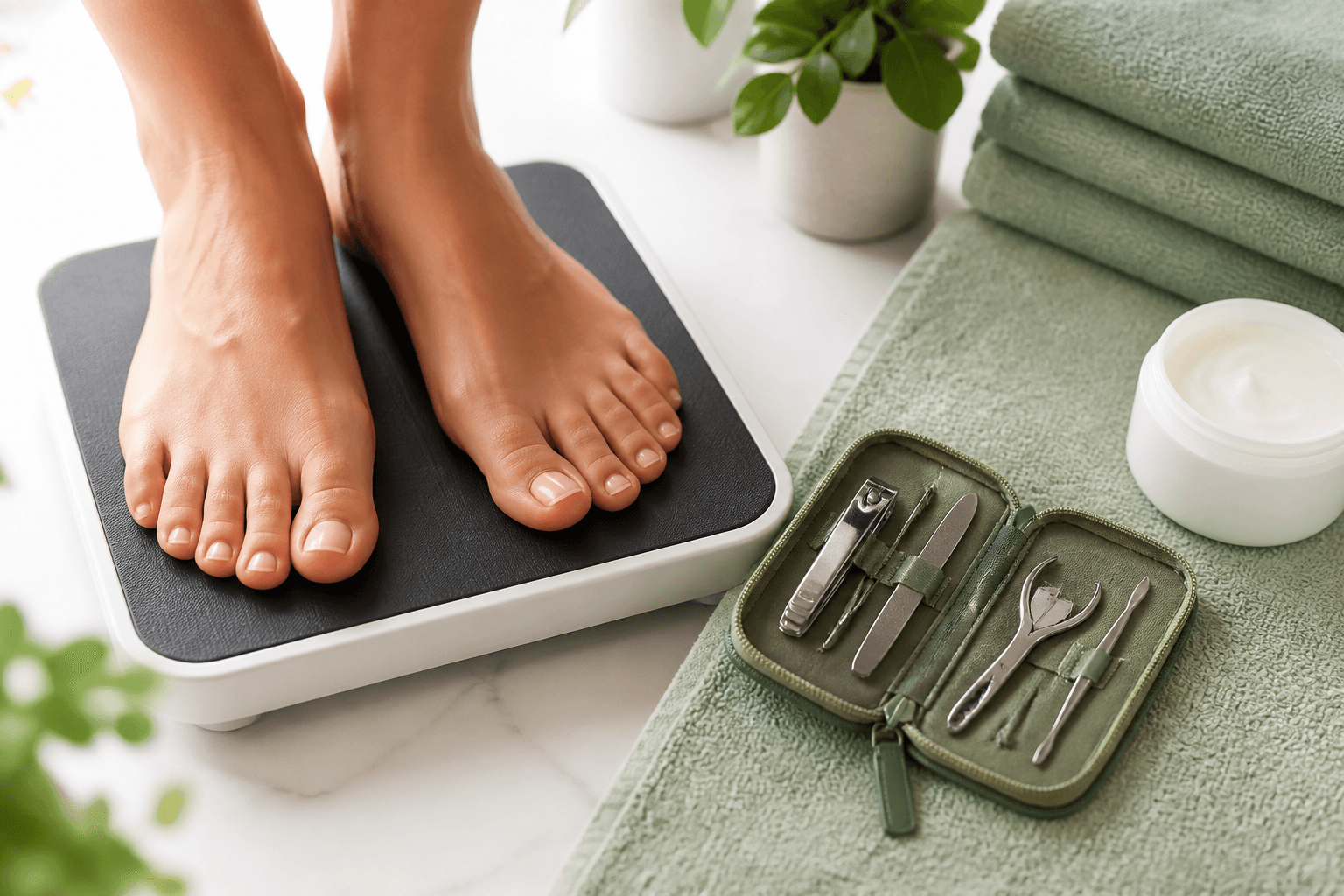
Living with diabetes already fills your calendar with numbers, appointments and reminders. Foot care can feel like one more chore until a small blister becomes a much bigger problem.
Reduced sensation and slower healing mean ordinary rubbing, dry skin or a tight shoe can escalate without much warning. The goal is not perfection. It is spotting change early and reducing avoidable pressure every day.
Prevention steps that actually help
Look once a day
Check soles, between toes and around nails. Use a mirror or ask a family member if bending is hard. Redness, warmth, cracks or drainage deserve same-week attention.
Wash, dry, moisturise
Warm water, thorough drying between toes, then moisturiser on the tops and soles (not between toes) keeps skin more resilient.
Never dig at nails or callus
Bathroom surgery with scissors or blades is a common path to infection. Leave stubborn nails and hard skin to a podiatrist.
Check shoes before you wear them
Shake out pebbles, feel for seams, and retire shoes that rub. Soft socks without heavy ridges reduce hotspots.
When home care stops being enough
If you have diabetes and have not had a structured foot risk review recently, waiting for pain is the wrong trigger. Many high-risk changes are quiet. A clinic visit sets your check frequency, footwear advice and a plan shared with your GP when needed.